GEOTECHNICALENGINEERING
NEW WESTMINSTER

Geotechnical Engineering in New Westminster

Rigorous testing. Clear reporting.

LEARN MORE

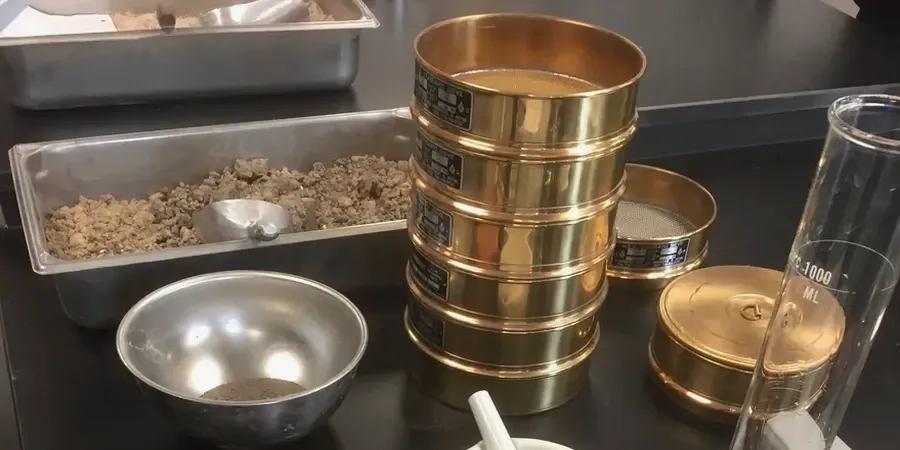
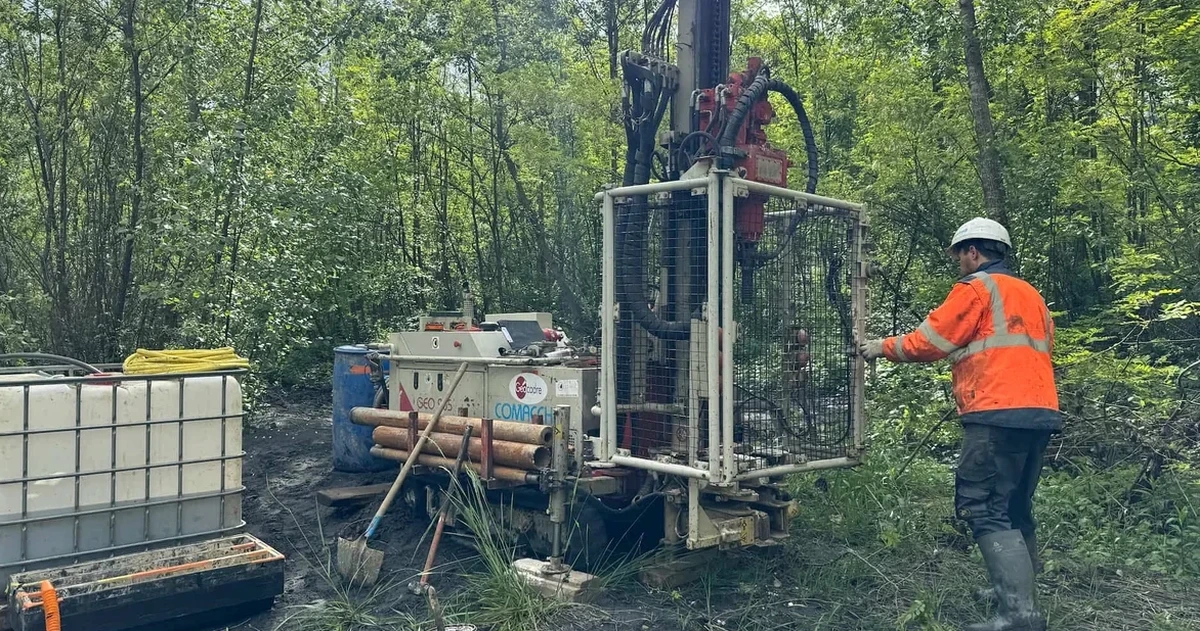
We see the same pattern across New Westminster every season. The Fraser River silts and the glacial till underneath create a layered ground profile that shifts from one block to the next. A soil mechanics study here does not start with a textbook. It starts with a core sample from Queensborough or a split-spoon from the Brow of the Hill and the immediate question of how the pore pressure will behave in October. We run the triaxial cell, the consolidation frame, and the sieve stack in our lab while field crews work on site. This is not a generic report. It is a direct measurement of effective stress, drained shear strength, and settlement potential for a city where the water table often sits less than two meters below the pavement. If the borehole data skips the sensitivity of the local marine clay, the foundation design goes wrong before the first rebar is tied. We cross-check field blow counts with the SPT drilling data and the CPT test tip resistance to build a consistent stratigraphic model.

The transition from Fraser River silt to glacial till in New Westminster can happen within a single borehole, and the strength contrast demands sample-specific lab testing.
Geotechnical Engineering in New Westminster
Technical reference — New Westminster

Our service areas

Local geology

A 14-story residential project on Columbia Street demanded a soil mechanics study that could reconcile two very different layers. The upper 5 meters were soft alluvial deposits from the Fraser. Below that, a dense till with cobbles made standard sampling slow. Our lab ran consolidated-undrained triaxial tests on thin-wall tube samples from the clay layer. We measured friction angles above 38 degrees in the till. The grain size distribution showed less than 12 percent fines in the lower stratum, which matched the CPT friction ratio. That combination of lab and field data allowed the structural engineer to reduce the pile length by 4 meters compared to the initial conservative estimate. We document every step. The Atterberg limits, the natural water content, the unit weight, and the preconsolidation pressure all go into the report with the chain of custody. In New Westminster, ignoring the seasonal variation of the water table means underestimating the buoyant unit weight, and that changes everything in the seismic analysis. For road subgrades near the Brunette River we combine the study with CBR testing to verify the bearing capacity of the compacted fill before paving.

Relevant standards

NBCC 2015 (National Building Code of Canada), CSA A23.3 (Design of Concrete Structures), ASTM D422 (Grain size analysis), ASTM D4318 (Atterberg limits), ASTM D4767 (CU triaxial test)

Need a geotechnical assessment?

Reply within 24h.

Email: info@geotechnicalengineering.vip

Why choose us

The NBCC 2015 and the seismic hazard data for New Westminster assign a Site Class based on the average shear wave velocity and the undrained shear strength of the upper 30 meters. A soil mechanics study that misjudges the sensitivity of the local marine clay can shift the site classification from Class C to Class E. That single change doubles the design spectral acceleration and forces a complete redesign of the lateral force-resisting system. The consequence is not just a paper error. It is a budget overrun and a permit delay that can kill a project. We have seen soil reports for the downtown area where the lab data was borrowed from a site 3 kilometers away. The till depth was different. The clay plasticity was different. The foundation recommendation failed. The NBCC is explicit: the shear strength parameters must come from laboratory tests on undisturbed samples from the specific site. In a city where the ground shakes at a magnitude 6.5 scenario every few decades, the lab report is not a formality. It is the first line of defense against differential settlement and bearing failure during the earthquake.

Reference parameters

ParameterTypical value
Triaxial test typeCU, CD, UU, CIU
Consolidation stageIncremental loading per CSA
Grain size analysisSieve + hydrometer (ASTM D422)
Atterberg limitsLL, PL, PI per ASTM D4318
Natural water contentOven-dried, reported per specimen
Unit weightBulk and dry, measured on tube samples
Shear strength envelopec' and phi' from triaxial
Report formatNBCC 2015 / CSA A23.3 compliant

Common questions

What does a soil mechanics study include in New Westminster?

The study starts with field sampling from drill rigs or test pits. In the lab we run grain size analysis, Atterberg limits, triaxial shear tests, and one-dimensional consolidation. The final report provides effective stress parameters, settlement estimates, and bearing capacity values for foundation design under NBCC 2015.

How long does a full lab program take for a site near the Fraser River?

A standard program with triaxial CU tests and consolidation takes 10 to 14 business days from sample receipt. If the site has sensitive marine clay and requires special handling, add 3 days for the extra consolidation stages.

What is the cost range for a soil mechanics study in New Westminster?

The cost ranges from CA$4,080 to CA$6,140 depending on the number of boreholes and the lab tests required. A typical program for a mid-rise building with two boreholes and a full triaxial suite falls within that range.

Do you test samples from other drilling contractors?

Yes. We accept tube and jar samples from any licensed driller in the Lower Mainland. We need the chain of custody, the boring log, and the sampling depth. We store the samples in a humidity-controlled room and start testing within 24 hours of receipt.

Location and service area

We serve projects in New Westminster and surrounding areas.

View larger map