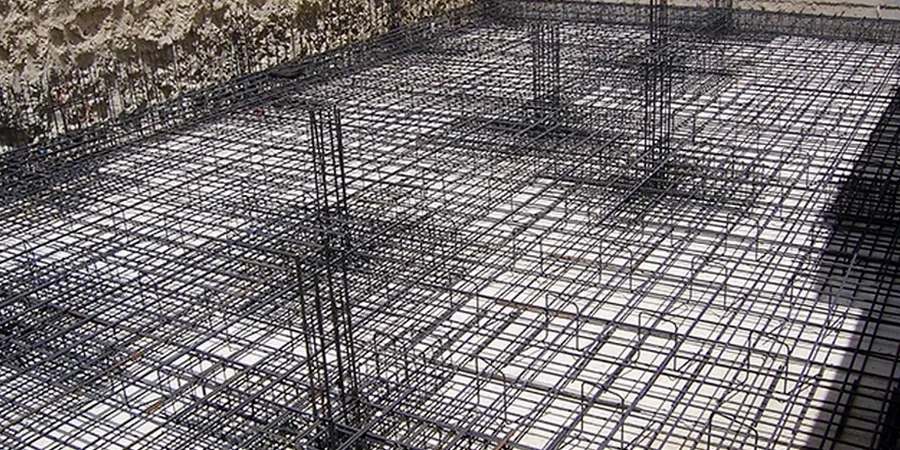
A six-story mixed-use project on Columbia Street hit an unexpected layer of compressible organic silt at just three meters depth—a scenario familiar to anyone who builds in New Westminster. The city sits on the north bank of the Fraser River, where Holocene alluvial deposits and underlying glacial till create a patchwork of bearing capacity. Rather than switch to deep foundations, the design team opted for a stiffened raft slab, distributing column loads across a wider footprint and bridging the soft pocket. This kind of decision turns on accurate geotechnical input: without knowing the thickness and consolidation characteristics of that silt, even a well-reinforced mat becomes a gamble. Our lab runs one-dimensional consolidation tests following ASTM D2435 and provides the settlement-versus-time curves that structural engineers need to model soil-structure interaction. For sites closer to the Brunette River or Glenbrook Ravine, where groundwater sits high, we often combine the raft design with a grain size analysis to confirm drainage behavior beneath the slab.
A properly designed raft foundation turns variable ground into a predictable platform—the slab settles, but it settles as one unit.