GEOTECHNICALENGINEERING
NEW WESTMINSTER
HomeLaboratoryAtterberg limits

Atterberg Limits Testing in New Westminster: Plasticity & Soil Behavior

Rigorous testing. Clear reporting.

LEARN MORE

We have seen too many projects in New Westminster where the foundation report lists 'silty clay' without defining its behavior. A soil description alone is not enough when you are dealing with the complex glaciomarine deposits along the Fraser River. The difference between a stable excavation and a costly shoring failure often comes down to the plasticity index. In our laboratory, we run the Atterberg limits test to quantify exactly how a soil will react to moisture changes. For contractors placing compacted fill in Queensborough or driving piles near the Pattullo Bridge, knowing the liquid limit and plastic limit is not a checkbox item. It is the data that prevents heave, shrinkage cracks, and long-term settlement. When we pair this with a CPT test along the riverfront, the combined dataset gives a complete picture of the stratigraphy and consistency of the sensitive marine silts that are common across the city.

A plasticity index above 20 in Queensborough silts means every rain delay puts your subgrade at risk of turning into a workability problem.
Our service areas

Our approach and scope

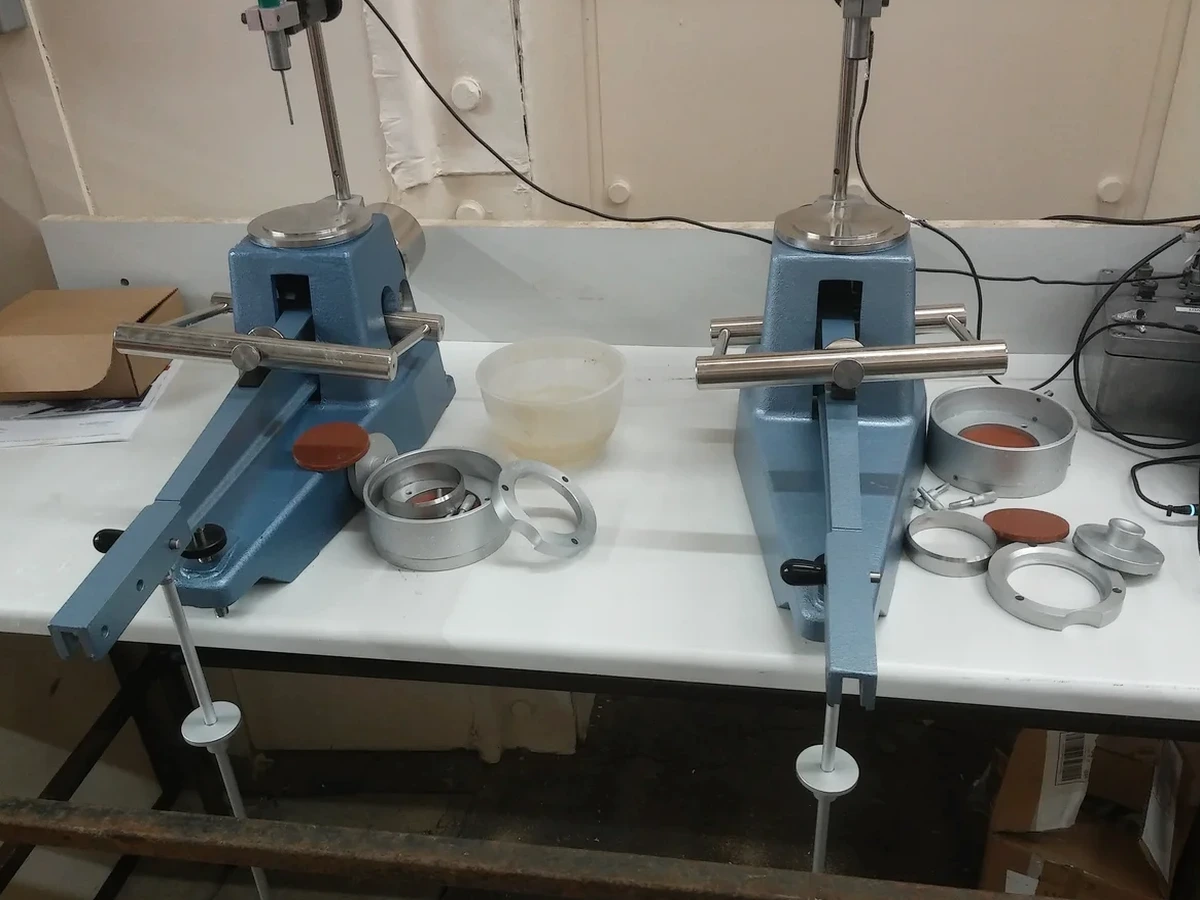
The soil behavior in New Westminster changes dramatically between neighborhoods. In the downtown core near Columbia Street, we encounter dense glacial till at shallow depth. The Atterberg limits there often show low plasticity, with liquid limits below 30. Just two kilometers south in Queensborough, the Fraser River floodplain tells a different story. The silty clays in that area have liquid limits frequently exceeding 50 and plasticity indices above 20. That level of plasticity demands careful moisture conditioning before compaction. Our lab technicians follow ASTM D4318 to determine the transition from plastic to liquid state using the Casagrande cup method. A typical testing sequence includes multiple-point liquid limit determination and the plastic limit thread-rolling procedure. These results feed directly into the Unified Soil Classification System (USCS), which the geotechnical engineer uses to specify allowable bearing pressure and lateral earth pressure coefficients for the retaining walls that are so common on sloping lots in the West End.
Atterberg Limits Testing in New Westminster: Plasticity & Soil Behavior
Technical reference — New Westminster

Local ground factors

One observation we make repeatedly on New Westminster sites is the presence of a desiccated crust over soft clay. The top meter of soil looks stiff and low-plasticity because of years of drying. The Atterberg limits on that crust might show a PI of 10. But just below it, the saturated clay can have a PI of 25 or higher. If you only test the surface material, you will underestimate the shrink-swell potential and the lateral loads on foundation walls. We have reviewed borehole logs where this crust was mistaken for a competent bearing stratum, leading to differential settlement in the finished structure. In our experience, taking Atterberg limit samples at every meter of depth in the upper five meters is the minimum to catch this transition. The quick liquidity index calculation that follows from these numbers tells the structural engineer whether the soil will behave as a brittle solid or a viscous fluid under dynamic loading during an earthquake.

Need a geotechnical assessment?

Reply within 24h.

Email: info@geotechnicalengineering.vip

Explanatory video

Relevant standards

ASTM D4318-17e1 (Standard Test Methods for Liquid Limit, Plastic Limit, and Plasticity Index of Soils), ASTM D2487-17e1 (Standard Practice for Classification of Soils for Engineering Purposes), NBCC 2020 (National Building Code of Canada), CSA A23.3 (Design of Concrete Structures)

Reference parameters

ParameterTypical value
Test StandardASTM D4318-17e1
Liquid Limit (LL)Moisture content at 25 blows (Casagrande)
Plastic Limit (PL)Moisture content at 3.2 mm thread crumbling
Plasticity Index (PI)LL - PL
Sample PreparationWet or dry preparation, passing No. 40 sieve
Typical Soil TypesMarine silt, glacial till, organic clay
ReportingUSCS classification, plasticity chart plot

Common questions

How much does Atterberg limits testing cost for a New Westminster project?

For a single sample tested for liquid limit and plastic limit, the cost ranges from CA$80 to CA$140 depending on the number of points in the liquid limit determination and the sample preparation method. A multi-point liquid limit test takes more technician time but gives a more reliable flow curve. We typically recommend budgeting for at least three samples per borehole to capture the vertical variability we see in the city.

What is the difference between the Casagrande cup method and the fall cone test for liquid limit?

The Casagrande cup method, which we use per ASTM D4318, measures the number of blows to close a groove over a standard distance. The fall cone test, more common in European practice, measures penetration depth. For the sensitive marine clays found in New Westminster, the Casagrande method has a large database of correlations to undrained shear strength that local engineers rely on, so we default to it unless the project specifications require otherwise.

Can you run Atterberg limits on samples with high sand content?

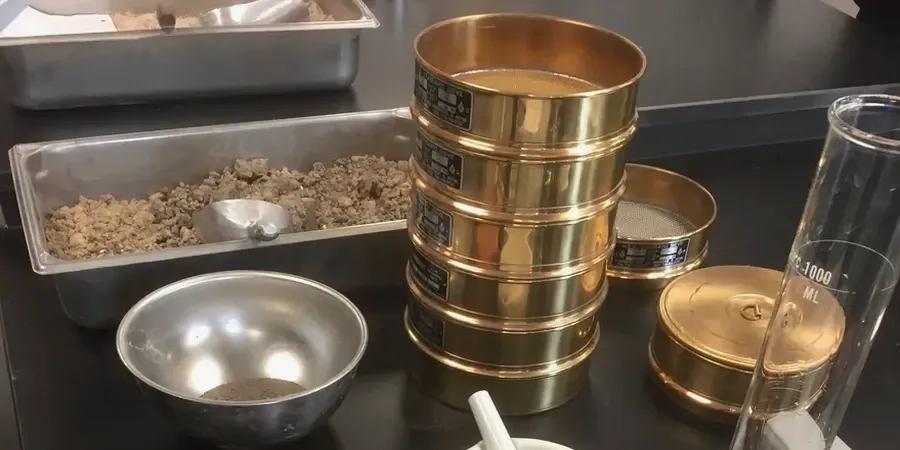
The test requires material passing the No. 40 sieve. If the sample has significant sand, we wet-sieve it first and then dry the fines fraction. For typical New Westminster soils, the marine silts process easily, but the glacial till from the upland areas can contain gravel and cobbles that require careful splitting in the lab to obtain a representative fines portion.

How do Atterberg limits help with compaction control on a site in Queensborough?

The plastic limit is the moisture content at which the soil transitions from a plastic to a semisolid state. For compaction, you want the moisture content near the optimum, which is typically a few percent below the plastic limit for clayey soils. If the contractor is working with Queensborough silts that have a plastic limit of 22, we would recommend targeting a moisture content around 19 to 20 percent to achieve maximum dry density without creating a pumping failure under the roller.

Location and service area

We serve projects in New Westminster and surrounding areas.

View larger map