GEOTECHNICALENGINEERING
NEW WESTMINSTER
HomeIn-Situ TestingField permeability test (Lefranc/Lugeon)

In-Situ Permeability Testing in New Westminster: Lefranc and Lugeon Methods

Rigorous testing. Clear reporting.

LEARN MORE

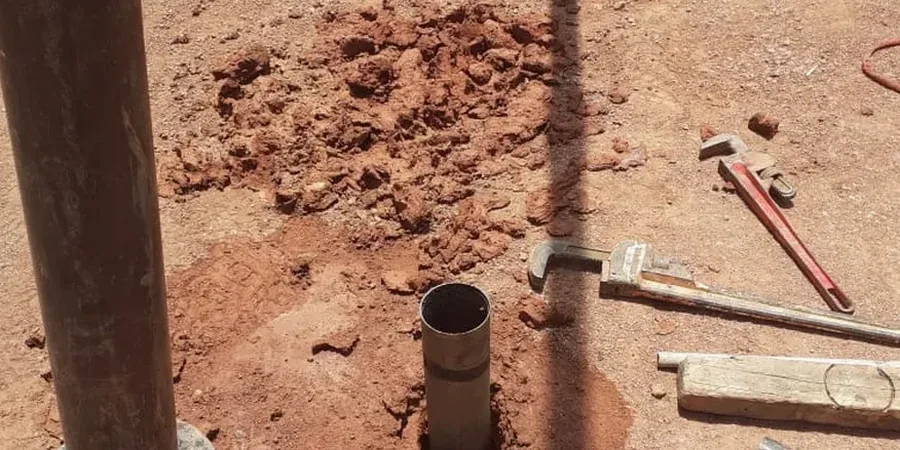
A common misstep in New Westminster is assuming soil permeability from a desk study. You see it on the slopes near Queen's Park. A contractor specifies a dewatering system based on a generic grain-size correlation. The excavation starts. Water flows in much faster than predicted. The slope stability becomes a real concern. The project stops. Costs spiral. The fix is direct measurement. A field permeability test, using the Lefranc method in soil or the Lugeon test in rock, provides the in-situ hydraulic conductivity value that a lab test simply cannot replicate. The local geology here, shaped by the Fraser River and glacial deposits, has highly variable drainage paths. A packer test in the fractured bedrock of the city's northern heights tells a different story than a borehole log alone. Before you commit to a dewatering or grouting program, get the real data from the ground.

A single Lugeon test in fractured bedrock replaces a hundred assumptions about grout take.
Our service areas

Our approach and scope

New Westminster sits at a low elevation along the Fraser River, with annual precipitation around 1,500 mm. This shapes every subsurface investigation. Water is always a factor. The Lefranc test measures permeability in granular soils above the water table, typically using a constant or variable head procedure within a cased borehole. It's straightforward but demands careful execution to avoid short-circuiting along the casing. The Lugeon test, developed for rock masses, isolates a section of the borehole with inflatable packers. The team from our accredited lab injects water at stepped pressures, recording the flow rate to calculate Lugeon units. A value under 1 Lugeon indicates tight rock, while over 10 signals open fractures needing grouting. Interpreting these results alongside a CPT test often clarifies the transition zone between dense till and weathered bedrock, where standard penetration tests lose resolution and the real water-bearing features begin.
In-Situ Permeability Testing in New Westminster: Lefranc and Lugeon Methods
Technical reference — New Westminster

Local ground factors

The setup is simple: a drill rig completes the borehole, and the crew lowers a pair of inflatable rubber packers to the target depth. For a Lugeon test in New Westminster's glacial till and underlying bedrock, isolating a 3- to 5-meter test section is critical. The biggest risk is packer bypass. If the packer doesn't seal against the borehole wall, water travels up the annulus instead of into the rock fractures. You get a falsely high permeability reading. The operator watches the pressure gauge and flow meter like a hawk. A sudden jump in flow without a corresponding pressure increase means the seal is gone. In soil, the Lefranc test risks clogging the filter screen with fine silt from the Fraser River floodplain deposits. A poorly developed test zone gives a permeability value that's too low, leading to undersized dewatering pumps and a flooded pit. The crew flushes the screen with clean water until the discharge runs clear before starting the test.

Need a geotechnical assessment?

Reply within 24h.

Email: info@geotechnicalengineering.vip

Relevant standards

NBCC 2020 (Part 4), CSA A23.3, ASTM D4630, ASTM D6391

Reference parameters

ParameterTypical value
Test Standard (Rock)ASTM D4630 / Houlsby Method
Test Standard (Soil)ASTM D6391 (Variable Head)
Packer TypePneumatic, single or double
Pressure Steps5-stage (Lugeon cycle)
Measurement Resolution0.1 L/min flow meter
Applicable Depth RangeUnlimited (section length ≥ 3 m)
Reporting MetricK (cm/s) or Lugeon units

Common questions

What is the cost range for a Lefranc or Lugeon test in New Westminster?

Field permeability testing in New Westminster typically falls between CA$750 and CA$1,280 per test section. The final figure depends on borehole depth, access conditions, and whether the test is run during an existing investigation or requires a standalone mobilization.

When is a Lugeon test required instead of a Lefranc test?

A Lugeon test applies to fractured rock masses. If the borehole encounters bedrock, especially the granodiorite or interbedded sedimentary rocks found at depth in New Westminster, the Lugeon method with inflatable packers provides the jointed rock mass permeability. The Lefranc test is for soil, typically sands and gravels above the bedrock surface.

How long does a field permeability test take?

A single Lugeon test usually takes 45 to 60 minutes to complete the five pressure stages. A Lefranc test can run from 30 minutes for a quick constant-head check to several hours in low-permeability silts where water levels stabilize slowly. Setup and packer inflation add another 20 minutes.

Location and service area

We serve projects in New Westminster and surrounding areas. More info.

View larger map