GEOTECHNICALENGINEERING
NEW WESTMINSTER
HomeSlopes & WallsRetaining wall design

Retaining Wall Design in New Westminster: Geotechnical Engineering for Fraser River Terrain

Rigorous testing. Clear reporting.

LEARN MORE

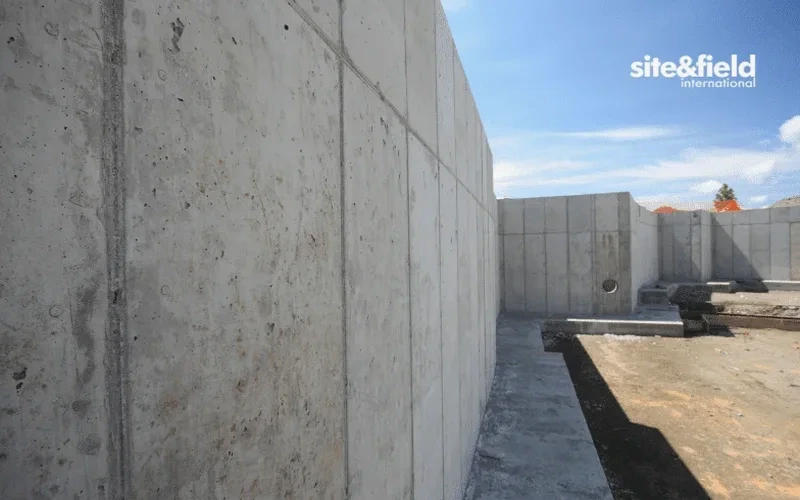
The Fraser River carves through New Westminster's core, creating a landscape of steep bluffs and saturated silt banks that challenge any vertical grade change. The city sits on a mix of glacial till, marine clay, and loose alluvial deposits that shift with seasonal groundwater. A retaining wall here is not a catalog product. It is a calculated response to lateral earth pressure, drainage loads, and seismic acceleration. Our team brings laboratory testing and site characterization to every design, evaluating soil friction angles and pore-water conditions before a single dimension is fixed. When the slope exceeds two meters or the property line hugs a railway cut, we integrate deep investigation data to size stems, toes, and heel lengths correctly. For nearby embankment projects, slope stability analysis provides the required factor of safety before wall geometry is finalized.

A wall on the New Westminster slope only works if the drainage design handles 1,400 mm of annual rain. Water pressure destroys more walls than backfill weight ever will.
Our service areas

Our approach and scope

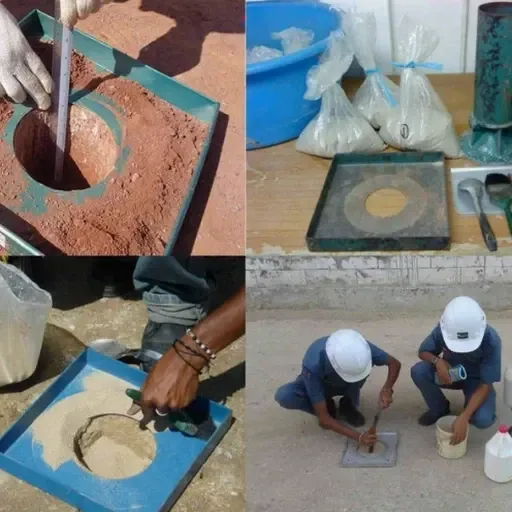
New Westminster's glacially overridden terrain produces stiff lodgement till at depth, but the upper five to ten meters are often compressible Staveley clays or loose sand lenses prone to settlement. The city's average annual precipitation of 1,400 mm saturates these surficial layers, generating hydrostatic pressures that govern wall thickness and reinforcement. We run drained and undrained triaxial compression on Shelby tube samples to capture effective stress parameters for the backfill and foundation soil. The wall type—cantilever, counterfort, or mechanically stabilized earth—depends on these lab results. Every design accounts for the NBCC seismic hazard value, which in New Westminster demands lateral earth pressure coefficients adjusted for peak ground acceleration. When the wall retains fill over soft native clay, we often recommend stone columns as ground improvement beneath the footing to limit total and differential settlement.
Retaining Wall Design in New Westminster: Geotechnical Engineering for Fraser River Terrain
Technical reference — New Westminster

Local ground factors

Historic development in New Westminster packed buildings onto riverfront bluffs long before modern geotechnical codes existed. The 1913 landslide near the old penitentiary site and ongoing erosion along the Brunette River banks are reminders that slope movement is not a theoretical exercise here. A retaining wall without subdrainage traps water, builds pressure, and eventually tilts or cracks. Undersized footings on the compressible clay layer settle unevenly, pulling the wall face out of alignment. Seismic loading during a moderate Cascadia or shallow crustal event can double the active earth thrust if the wall was designed only for static conditions. We require a factor of safety of 1.5 against overturning and sliding under the NBCC seismic combination. Ignoring the perched groundwater table in the fall and winter months is the single most common failure mechanism we observe in forensic reviews of distressed walls across the Lower Mainland.

Need a geotechnical assessment?

Reply within 24h.

Email: info@geotechnicalengineering.vip

Relevant standards

NBCC 2020 (National Building Code of Canada), CSA A23.3:19 (Design of Concrete Structures), CSA S6:19 (Canadian Highway Bridge Design Code, for MSE walls), ASTM D698 / D1557 (Proctor compaction for backfill control)

Reference parameters

ParameterTypical value
Backfill friction angle (Ø')28° to 38° (lab-tested)
Cohesion (c') for native clay0 to 15 kPa (drained)
Unit weight (backfill)18 to 21 kN/m³
Groundwater level (seasonal)1.5 to 4.0 m below grade
Seismic coefficient (kh)Per NBCC site class C/D
Bearing capacity (till)150 to 300 kPa (factored)
Design life50 years minimum per CSA

Common questions

What does retaining wall design cost in New Westminster for a typical residential lot?

Design fees for a single-family residential retaining wall in New Westminster generally range from CA$1,640 to CA$6,370. The spread depends on wall height, proximity to property lines, slope steepness, and whether the City requires a geotechnical report with the building permit application.

Does the City of New Westminster require a stamped engineer design for retaining walls?

Yes. The City of New Westminster requires a professional engineer's sealed design and a geotechnical report for any retaining wall over 1.2 meters in height, or any wall supporting a surcharge such as a driveway, building, or public right-of-way.

How do you handle drainage behind the wall in New Westminster's wet climate?

We specify a continuous drainage blanket of clear crushed rock, a perforated collection pipe at the footing level, and weep holes spaced at 1.5 meters on center. The pipe outlets must daylight to a storm sewer or a splash pad to prevent erosion at the toe.

What is the expected design life of a cast-in-place concrete retaining wall here?

We design for a 50-year service life per CSA A23.3, with 75 mm of concrete cover over reinforcing steel when exposed to de-icing salts or marine air near the Fraser River. Proper backfill compaction and drainage maintenance extend the wall's life well beyond the design minimum.

Location and service area

We serve projects in New Westminster and surrounding areas.

View larger map