GEOTECHNICALENGINEERING
NEW WESTMINSTER
HomeGround improvementStone column design

Stone Column Design in New Westminster

Rigorous testing. Clear reporting.

LEARN MORE

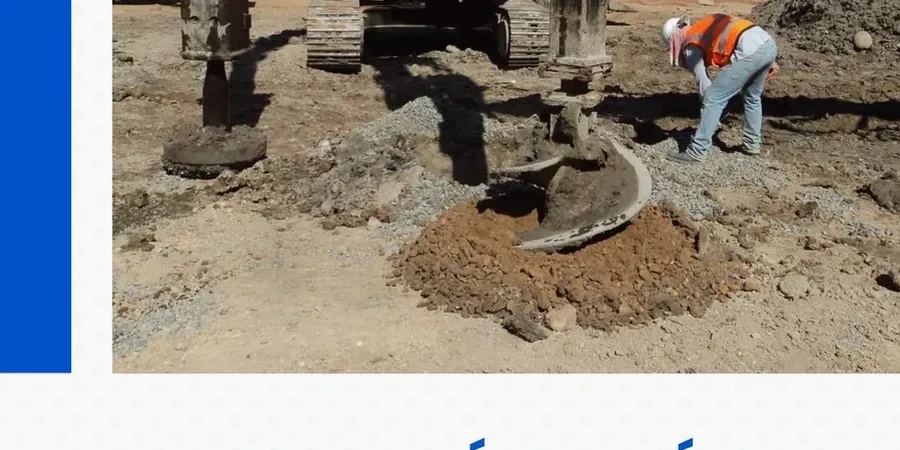
New Westminster sits at just 60 meters above sea level on the north bank of the Fraser River. That low elevation means the water table is high and the soils are soft. We deal with this every day. The city’s population density – the highest in Metro Vancouver at over 5,200 people per square kilometer – pushes construction onto marginal land. Land that often needs ground improvement. Stone column design is our primary tool for these sites. We use it to reinforce the compressible silts and clays found across the city. A CPT test helps us profile these soils without disturbing them. The data feeds directly into our column grid design. The goal is settlement control and bearing capacity increase. We know the local geology. The Fraser River delta deposits here can extend over 100 meters deep. Standard footings are not enough. We step in when the ground is too weak.

In the Fraser River delta, stone columns routinely cut foundation settlements by half while accelerating consolidation time in the soft clays.
Our service areas

Our approach and scope

The city’s development history is tied to its port. Much of downtown and Queensborough sits on reclaimed or altered land. The 1860s gold rush brought rapid construction. No one back then worried about deep soil mechanics. Today we inherit those fill layers. Stone column design here means working with very erratic subsurface profiles. We often find buried organic layers and loose sands. Vibro-replacement columns bypass these weak zones. We install them to refusal or to a depth where the load can be safely spread. The columns form a composite ground mass. Before we design the grid, a grain-size analysis of the native soil is essential. It tells us how the soil will drain during vibration. We then specify the stone grade. We also check the fines content. Too much silt and the columns need a different installation approach. Our team has executed designs from the Brow of the Hill to Sapperton.
Stone Column Design in New Westminster
Technical reference — New Westminster

Local ground factors

NBCC 2020 and CSA A23.3 govern our structural and seismic design. In New Westminster, the seismic hazard is real. The Georgia Strait fault system is close. Soft soils amplify shaking. Stone column design here must include a liquefaction assessment. We use the Seed and Idriss simplified procedure to check the factor of safety. The columns act as drains. They relieve excess pore pressure during an earthquake. Without this drainage path, the ground can lose all strength. We have seen untreated sites where the cyclic resistance ratio was below 0.15. After treatment, we push it above the demand. Settlement in the post-liquefaction phase is another risk. We calculate it using the Tokimatsu and Seed method. Our designs in Queensborough have faced some of the highest liquefaction potential in the region.

Need a geotechnical assessment?

Reply within 24h.

Email: info@geotechnicalengineering.vip

Relevant standards

NBCC 2020 (National Building Code of Canada), CSA A23.3 (Design of Concrete Structures – Seismic Provisions), ASTM D5777 (Standard Guide for Seismic Refraction), CFEM (Canadian Foundation Engineering Manual)

Reference parameters

ParameterTypical value
Typical Column Diameter0.6 to 1.2 m
Replacement Ratio10% to 35% of treatment area
Effective Treatment DepthUp to 25 m in deltaic deposits
Stone Grade (Clean Angular)25 to 75 mm typical
Post-treatment SettlementReduced by 40% to 60%
Load per Column200 to 500 kN typical
Liquefaction MitigationDensification + drainage

Common questions

What is the typical cost range for stone column design in New Westminster?

For most residential and light commercial projects here, the engineering design fee ranges from CA$1,920 to CA$7,660. The final cost depends on the treated area size and the number of verification tests required.

How do stone columns perform during an earthquake in the Fraser River delta?

They perform two functions. The columns densify the surrounding loose sand during installation. They also create vertical drainage paths. This combination reduces the risk of liquefaction. In our New Westminster projects near the river, we target a post-treatment factor of safety above 1.3.

How long does the design phase take before installation can start?

We typically need two to three weeks. The first week is for field testing like CPT soundings. The second week is for analysis and modeling. We then issue a stamped design package for your building permit application.

Can you design stone columns for very small urban lots in New Westminster?

Yes. We have designed columns for lots as narrow as 10 meters in the downtown area. We adjust the rig size specification and the grid layout. The design has to account for the vibration impact on adjacent older structures, which is common in the heritage districts.

Location and service area

We serve projects in New Westminster and surrounding areas.

View larger map