GEOTECHNICALENGINEERING
NEW WESTMINSTER
HomeInvestigationSPT (Standard Penetration Test)

SPT Testing in New Westminster: Accurate Soil Stratigraphy for Foundation Design

Rigorous testing. Clear reporting.

LEARN MORE

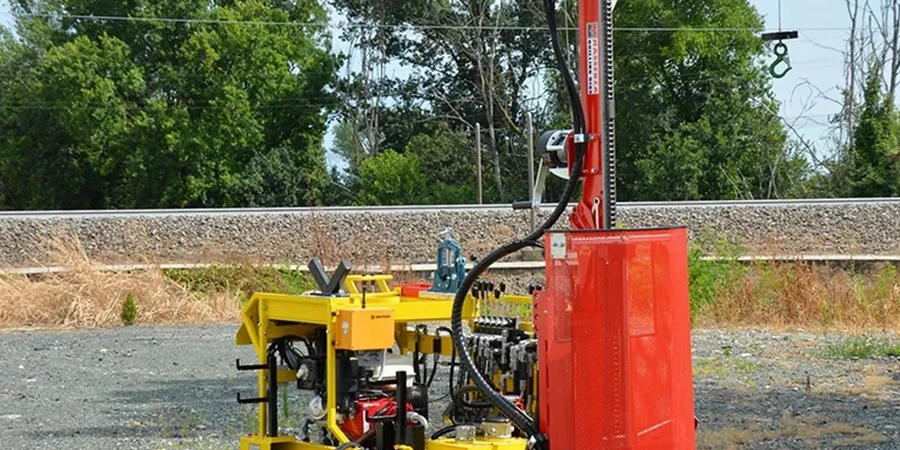
The Fraser River deposited up to 30 meters of soft, compressible silt and clay across the New Westminster lowlands, and anyone driving piles into it without solid blow count data is guessing. The Standard Penetration Test cuts through that guesswork. Our field crews run SPT rigs weekly across Queensborough, Sapperton, and the Brow of the Hill, recording N-values every 1.5 meters through sands, organics, and the dense Vashon till that underlies much of the city. Those numbers feed directly into bearing capacity calculations, pile length estimates, and the NBCC seismic site classification that New Westminster building officials demand before issuing a permit. When the borehole hits a loose sand lens at 12 meters beneath Columbia Street, we want the contractor to know about it before the excavator arrives. For sites where silt dominates and blow counts run low, pairing the SPT with a CPT test can map thin drainage layers that standard split-spoon recovery misses.

In New Westminster's Fraser River sediments, a 5-blow difference in SPT N-value can shift a site from Site Class D to E and add six figures to the seismic lateral load demand.
Our service areas

Our approach and scope

The most common mistake we see in New Westminster is running the SPT at the standard N60 correction but ignoring the hammer energy ratio on a safety hammer that has not been calibrated since it left the shop. That yields N-values 15 to 20 percent higher than reality, and a foundation designed on inflated numbers becomes a settlement problem within two wet seasons. Our procedure follows CSA A23.3 and ASTM D1586, with an automatic trip hammer calibrated to a measured energy ratio. We log every 18-inch spoon recovery, note the presence of shells or wood debris typical of the Capilano sediments, and flag any refusal above 50 blows in less than 6 inches. The borehole log also records groundwater strike depth, which in New Westminster can sit within 2 to 4 meters of grade during the November-to-March window, and that water level directly affects liquefaction assessment under NBCC 2020. A single SPT boring in Queensborough, where much of the land is fill placed after the 1948 flood, often reveals three distinct compressible layers before hitting competent till, and skipping the detail means the structural engineer sizes footings for a soil profile that does not exist.
SPT Testing in New Westminster: Accurate Soil Stratigraphy for Foundation Design
Technical reference — New Westminster

Local ground factors

New Westminster sits at roughly 50 meters above sea level on its highest glacial uplands but drops to near river grade in Queensborough, and the 1946 Vancouver Island earthquake (M7.3) reminded every engineer in the Lower Mainland that deep alluvial basins amplify long-period motion. The NBCC 2020 seismic hazard model assigns the city a PGA around 0.3 to 0.4g on firm ground, but the site-specific SPT N-values can push the design spectrum much higher once the soil column is classified. Loose saturated sand layers with N-values below 15 at shallow depth are prime candidates for liquefaction, and the Fraser River delta has well-documented cases of lateral spreading during moderate events. A single SPT borehole that misidentifies a dense silt as loose sand triggers a Site Class E designation and forces the structural team into a much heavier lateral system. Getting the blow counts right and sampling the fines content for grain-size correlation is what keeps a four-story wood-frame building on Columbia Street within its budget and its seismic drift limits.

Need a geotechnical assessment?

Reply within 24h.

Email: info@geotechnicalengineering.vip

Relevant standards

NBCC 2020 (National Building Code of Canada, seismic provisions), CSA A23.3 (Design of Concrete Structures, foundation references), ASTM D1586 (Standard Test Method for SPT and Split-Barrel Sampling of Soils), BC Building Code 2018 (adopted with provincial amendments), CFEM (Canadian Foundation Engineering Manual, 4th ed.), Seed & Idriss ground motion correlation framework

Reference parameters

ParameterTypical value
Hammer typeAutomatic trip, calibrated energy ratio
SamplerStandard split-spoon, 2-inch OD
Depth interval1.5 m (5 ft) continuous sampling
Blow count range logged0 to refusal (>50 blows / 6 in)
Energy correctionN60 per Seed & Idriss (1985)
Groundwater recordingStrike depth at time of drilling
Sample recoveryMeasured and reported per 18-inch drive

Common questions

How much does an SPT borehole cost in New Westminster?

A single SPT borehole to 15 meters depth in typical New Westminster soil conditions runs between CA$840 and CA$940, which includes the rig mobilization, the driller's time, the split-spoon sampling at 1.5-meter intervals, the field log with groundwater strike, and the signed N-value report. Deeper holes, difficult access in Queensborough back lanes, or additional Shelby tube sampling push the cost higher, and we always provide a fixed-price proposal after reviewing the site plan and the expected depth to till.

How deep do you drill SPT boreholes for a typical New Westminster townhouse project?

For a three-to-four-story wood-frame building on the Brow of the Hill or in Sapperton, we typically advance the SPT to 15 or 20 meters, which is enough to penetrate the Capilano sediments and confirm refusal in the Vashon till. If the site is in Queensborough on deep alluvium, the borehole may need to go 25 meters to reach competent bearing, and we add a CPT sounding to track the silt-sand transitions between spoon samples.

How soon can you mobilize an SPT rig in New Westminster?

We keep a CME-75 track rig and a smaller limited-access rig available for the Lower Mainland. For standard single-family or townhouse sites, we can typically have a crew on site within five to seven business days after the drilling permit is secured. The City of New Westminster requires a right-of-way permit if the borehole is within the boulevard, and we handle that application as part of the mobilization.

Location and service area

We serve projects in New Westminster and surrounding areas.

View larger map