GEOTECHNICALENGINEERING
NEW WESTMINSTER
HomeSeismicBase isolation seismic design

Base Isolation Seismic Design in New Westminster

Rigorous testing. Clear reporting.

LEARN MORE

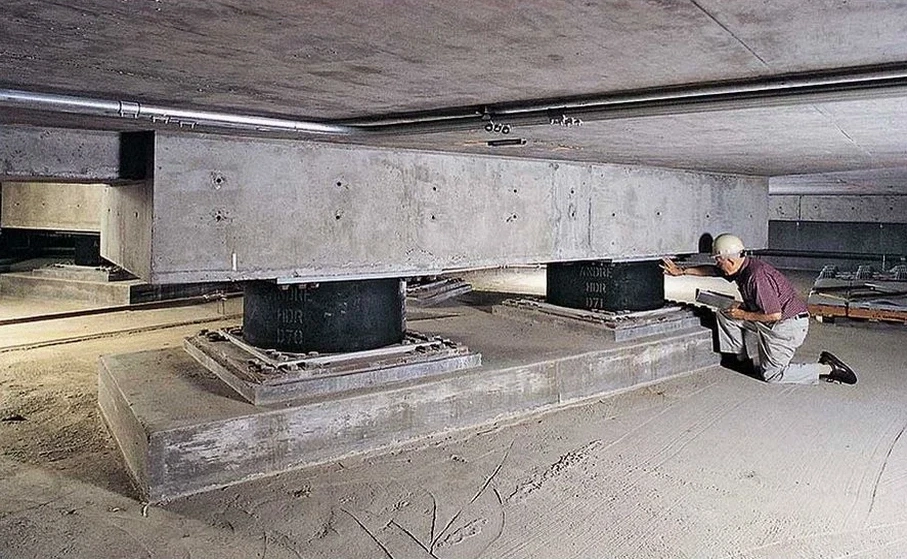
Applying base isolation seismic design in New Westminster goes well beyond standard structural detailing—it demands a thorough understanding of local ground response shaped by deep alluvial deposits and the proximity of the Fraser River. The city sits within a high-hazard zone under the National Building Code of Canada (NBCC 2020), with Site Class D and E profiles dominating the lowland areas and long-period amplification that can penalize conventional fixed-base construction. In our experience reviewing projects near the Skytrain corridor and the downtown densification belt, the decision to isolate the superstructure is often driven by the need to protect critical functions and control interstory drift, not just to meet base shear targets. A well-designed isolation system reduces floor accelerations and allows the building to ride out the long-duration shaking that characterizes Cascadia Subduction Zone events. For sites where borehole data confirms soft cohesive soils extending past 30 m, we often recommend coupling the isolation analysis with a seismic microzonation study to refine the site-specific spectra before finalizing the isolator properties.

Long-period amplification on New Westminster’s deep alluvial soils can turn a fixed-base structure into a resonant oscillator—base isolation decouples the building from that specific hazard.
Our service areas

Our approach and scope

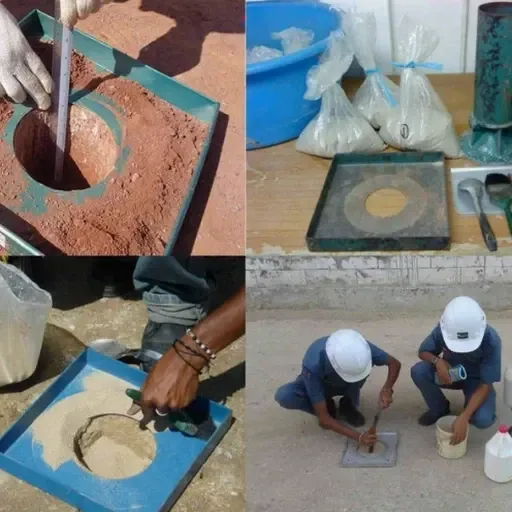
A recent 10-storey mixed-use building on Carnarvon Street illustrates what we see repeatedly in New Westminster’s downtown core: a narrow lot with adjacent heritage facades, Site Class D soils, and a client mandate to maintain full occupancy after the design earthquake. The isolation plane was introduced just above the parkade transfer slab, using sixteen lead-rubber bearings with a target period of 3.1 seconds. Because the site sits within 3 km of the Fraser River, the geotechnical report flagged a potential for cyclic softening in the upper silty layers, which we addressed by running the isolation model through a suite of scaled ground motions that captured both interface and in-slab Cascadia events. The lateral displacement demand reached 410 mm at the MCE level, requiring a moat wall detail that doubled as a permanent form for the perimeter foundation wall. Throughout the design, we cross-checked the soil-bearing capacity beneath the isolator pedestals using data from the plate load test program, ensuring that the concentrated loads at each bearing location stayed well within the allowable bearing pressure confirmed on site.
Base Isolation Seismic Design in New Westminster
Technical reference — New Westminster

Local ground factors

With a population exceeding 78,000 and a building stock that includes high-density residential towers constructed before modern ductility provisions, New Westminster faces a significant seismic risk that is compounded by its location on the northern edge of the Fraser River delta. The city experienced damaging shaking during the 1946 Vancouver Island earthquake, and paleoseismic studies confirm that the Cascadia Subduction Zone has produced magnitude 9 events with a recurrence interval of roughly 500 years. The combination of deep soft soils, a high water table, and a growing inventory of essential facilities along the Royal Columbian Hospital corridor makes base isolation one of the few strategies that can simultaneously protect structural integrity, non-structural components, and post-earthquake functionality without imposing the architectural penalties of oversized shear walls. Ignoring the amplification effects of the local soil column—or relying solely on force-based design—leaves building owners exposed to downtime and repair costs that often far exceed the incremental investment in an isolation system.

Need a geotechnical assessment?

Reply within 24h.

Email: info@geotechnicalengineering.vip

Relevant standards

NBCC 2020 (National Building Code of Canada), Part 4 and Commentary L, CSA S832-14 (R2019): Seismic risk reduction of operational and functional components of buildings, CSA A23.3-19: Design of concrete structures, including ductility and anchorage provisions for isolation pedestals, ASTM D4015-21: Standard test methods for modulus and damping of soils by resonant-column method (referenced for site-specific dynamic soil properties)

Reference parameters

ParameterTypical value
Design spectral acceleration Sa(1.0 s), Site Class E0.45–0.72 g (NBCC 2020 Vancouver Metro adjusted)
Isolation period target range (lead-rubber bearings)2.5–3.5 s
Effective damping ratio (βeff)15–30 % typical for LRB isolators
Maximum considered earthquake displacement demand350–550 mm (depends on near-fault factor)
Superstructure drift reduction vs. fixed-base50–75 % reduction at design-basis level
Soil profile shear wave velocity (upper 30 m)Vs30 typically 180–360 m/s in downtown New Westminster

Common questions

How much does a base isolation design package cost for a mid-rise building in New Westminster?

For a typical 6–12 storey structure in New Westminster, the design package including nonlinear time-history analysis, isolator specification, peer-review coordination, and moat detailing falls between CA$5,710 and CA$10,450, depending on the number of ground motion sets required and the complexity of the structural irregularity. Projects requiring supplemental damping or a staged construction sequence in dense urban blocks tend toward the upper end.

Does the NBCC 2020 require a peer review for base-isolated buildings?

Yes. For post-disaster and high-importance structures, NBCC 2020 Commentary L mandates an independent peer review of the isolation design, including the ground motion selection, isolator testing protocol, and the bounding analysis. The City of New Westminster typically enforces this requirement as a condition for the building permit on essential facilities.

What isolator types are most suitable for the soft soil conditions common along the Fraser River?

Lead-rubber bearings and triple friction pendulum systems both perform well on New Westminster’s soft clay and silt profiles, but the choice hinges on the spectral ratio between short-period and 1–2 second demands. We often find that lead-rubber bearings provide better recentering on Site Class E profiles with significant long-period amplification, while friction pendulum systems excel when the project requires a very compact isolator footprint with high displacement capacity.

How do you validate isolator properties during construction in New Westminster?

The NBCC 2020 and CSA S832 require prototype testing on two full-scale isolators per production lot, plus production tests on every isolator installed. Our scope includes reviewing the test reports against the design hysteresis loops, verifying the effective stiffness and damping at the design displacement, and conducting factory inspection when the project is within the Metro Vancouver corridor.

Location and service area

We serve projects in New Westminster and surrounding areas.

View larger map