GEOTECHNICALENGINEERING
NEW WESTMINSTER
HomeFoundationsShallow foundation design

Shallow Foundation Design in New Westminster: Soil Variability and Site-Specific Bearing

Rigorous testing. Clear reporting.

LEARN MORE

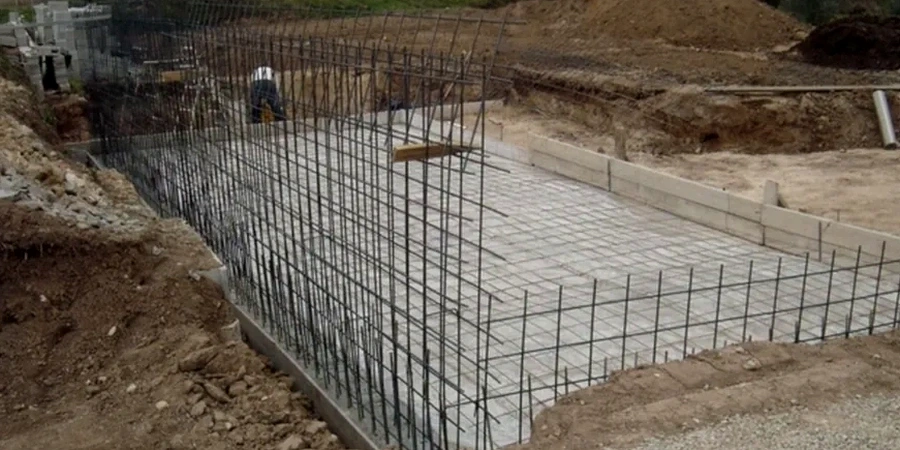
New Westminster sits at a dynamic intersection of land and water, where the Fraser River meets a steep escarpment rising over 60 meters above the floodplain. This topography, combined with a population exceeding 80,000, creates a patchwork of soil conditions that ranges from dense glacial till on the uplands to deep, soft alluvial silts and clays near the river. Designing a shallow foundation here is not a simple lookup-table exercise. The 2020 National Building Code of Canada (NBCC) mandates seismic hazard considerations that are particularly acute given Metro Vancouver's subduction zone risk, and a site-specific investigation reveals how drastically bearing capacity and settlement potential change over distances of just a few hundred meters. What works for a footing on the Glenbrooke slope will almost certainly fail near the Quayside unless the compressible deltaic soils are properly characterized. Our team approaches every New Westminster project with this granular understanding, recognizing that the city's layered geology demands a foundation design that is tailored to the block, not just the municipality.

In New Westminster's floodplain, settlement under dead load governs shallow foundation design more often than ultimate bearing capacity failure.
Our service areas

Our approach and scope

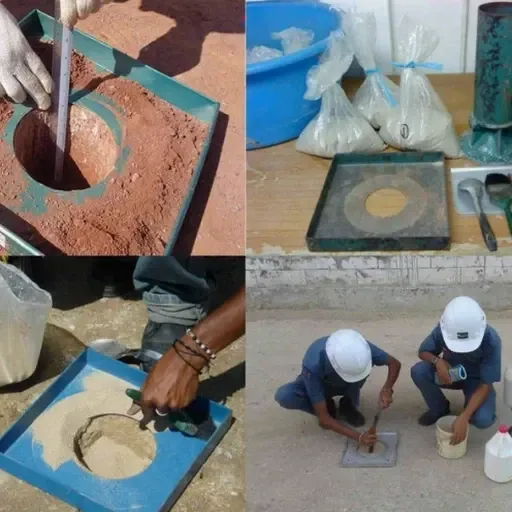
The NBCC 2020 and CSA A23.3 form the backbone of structural concrete design, but for shallow foundations in New Westminster, the geotechnical assumptions are everything. The city's older neighborhoods, like Queen's Park and the West End, often sit on Pleistocene-age Vashon till—dense, overconsolidated, and generally excellent for bearing. In contrast, the downtown and Sapperton areas overlay post-glacial marine and river deposits where undrained shear strengths can dip below 30 kPa. A site class determination under NBCC Table 4.1.8.4.A becomes critical; a Site Class D or E profile in the floodplain amplifies seismic shaking and introduces long-period effects that punish settlement-sensitive structures. We routinely see projects where a presumed allowable bearing pressure of 150 kPa is viable on the till, yet a neighboring lot requires a mat foundation or rigorous soil improvement after testing reveals thick lenses of compressible peat. Our analysis integrates consolidation testing data—specifically constrained modulus from incremental loading—to predict differential settlement under sustained dead loads, which is often the governing failure mode, not bearing capacity shear.
Shallow Foundation Design in New Westminster: Soil Variability and Site-Specific Bearing
Technical reference — New Westminster

Local ground factors

A common mistake we see in New Westminster is treating the entire city as a uniform seismic zone without accounting for basin amplification in the Fraser River delta. A contractor might assume that a conventional spread footing designed for 200 kPa bearing will perform identically on Columbia Street as it does on Sixth Avenue, but the difference in underlying stratigraphy means one footing sits on stiff till while the other floats on saturated, liquefiable sand and silt. During a design-level earthquake—the NBCC requires consideration of a 2% in 50-year probability event—excess pore water pressure can accumulate rapidly in the loose deltaic deposits. If a shallow foundation has not been designed with a competent bearing stratum or a densified subgrade, cyclic mobility triggers unacceptable total and differential settlement that can render a building uninhabitable even if the structural frame survives. We perform cyclic direct simple shear (DSS) testing on shelby tube samples from these layers to calibrate liquefaction-triggering curves, ensuring the foundation subgrade either extends through the problematic zone or is improved through methods like vibrocompaction before concrete is placed.

Need a geotechnical assessment?

Reply within 24h.

Email: info@geotechnicalengineering.vip

Explanatory video

Relevant standards

NBCC 2020 – Division B, Part 4 (Structural Design) & Part 9 (Small Buildings), CSA A23.3: Design of Concrete Structures, ASTM D1194 / D1195 – Plate Load Test Procedures (Bearing Capacity Reference), ASTM D2435 – One-Dimensional Consolidation Properties of Soils, CSA S6:19 – Canadian Highway Bridge Design Code (for bridge footings)

Reference parameters

ParameterTypical value
Typical Undrained Shear Strength (Su) – Floodplain Silts20–45 kPa
Typical SPT N-Value – Glacial Till (Uplands)30–60 blows/300mm
Seismic Site Class Range (NBCC 2020)C (till) to E (soft clay/peat)
Allowable Bearing Pressure (Till, FS=3)150–250 kPa
Post-Construction Settlement Limit (Residential)25 mm (total), 19 mm (differential)
Depth to Competent Till (Downtown Core)5–15 m below grade
Groundwater Depth (Quayside/Downtown)1–3 m below surface

Common questions

What is the typical bearing capacity for a shallow foundation in New Westminster's upland neighborhoods?

In areas underlain by Vashon glacial till, such as the Glenbrooke and Queen's Park neighborhoods, we typically assign allowable bearing pressures between 150 and 250 kPa with a factor of safety of 3. This assumes a minimum footing width of 600 mm and embedment below the frost depth. The actual value depends on SPT N-values and the proximity to steep slopes, which requires a stability check under NBCC.

How does liquefaction risk affect shallow foundation design near the Quayside?

Much of the Quayside and downtown are underlain by loose, saturated sands that are susceptible to liquefaction. A shallow foundation in this zone requires either removal and replacement of the liquefiable layer, or ground improvement such as vibrocompaction to increase relative density above 70%. Our designs incorporate post-liquefaction settlement estimates from cyclic laboratory testing to ensure the structure can tolerate the predicted ground movement without structural distress.

Do we need a mat foundation instead of strip footings for a small apartment building in Sapperton?

Sapperton sits on a mix of till and softer basin soils. If the geotechnical investigation reveals more than 3 meters of compressible clay, a mat foundation often becomes the more economical solution. It reduces the risk of differential settlement between discrete footings, and the structural continuity provides redundancy against localized soft spots that are common in the transition zone between the upland and the river plain.

What is the cost range for shallow foundation design services in New Westminster?

For a standard residential or small commercial project, our design fees for shallow foundations typically range from CA$2.390 to CA$3.940, depending on the complexity of the soil profile and whether a mat foundation or subgrade improvement specification is required. This includes the structural calculations, reinforcement detailing sketches, and construction-phase subgrade inspection coordination.

Location and service area

We serve projects in New Westminster and surrounding areas.

View larger map